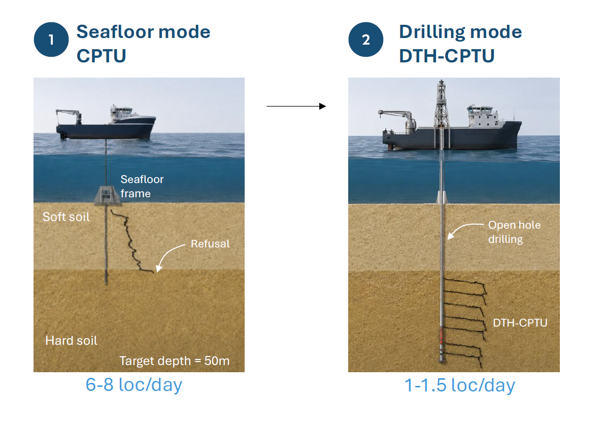
Even if money were no issue the availability of geotechnical drillship’s certainly is. The JIP currently project a gap in drilling vessel capacity of 45% by 2030. In a cyclical business, even if upward trending business, investing in drillships that must work 65% of available days to not be a cost burden is clearly a sizeable risk.
The Solution – Deep Push Seabed CPT, but with a Difference
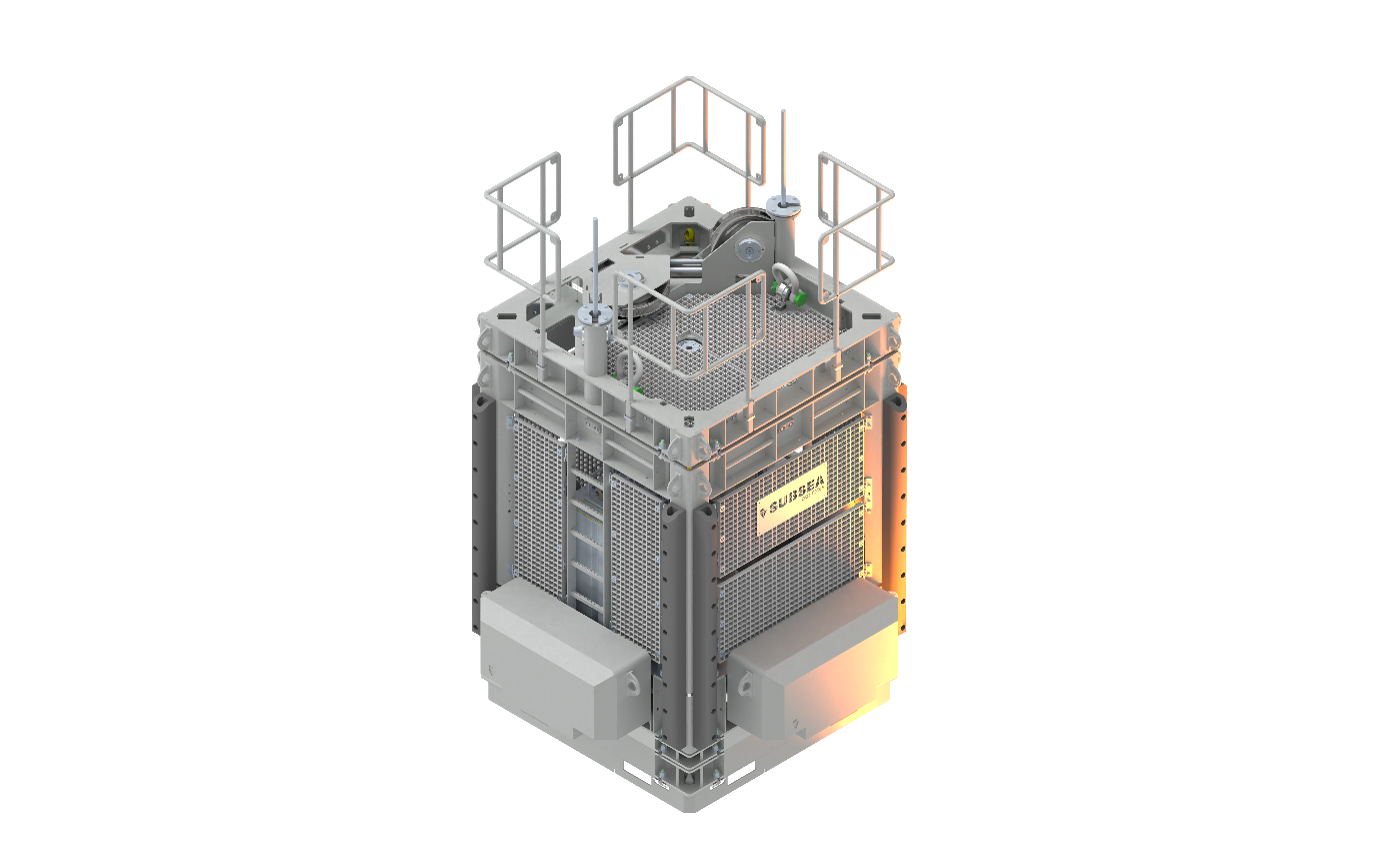
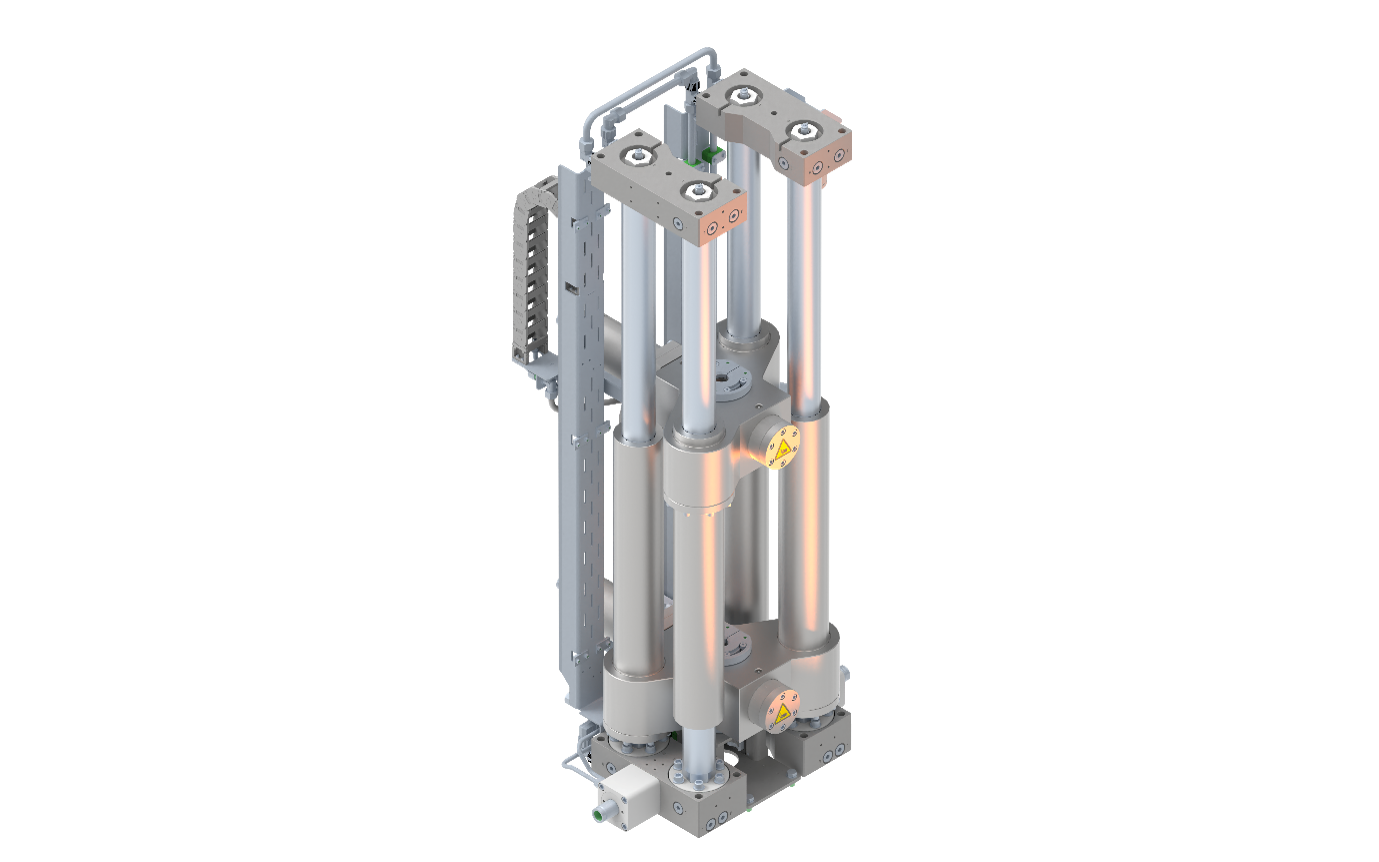
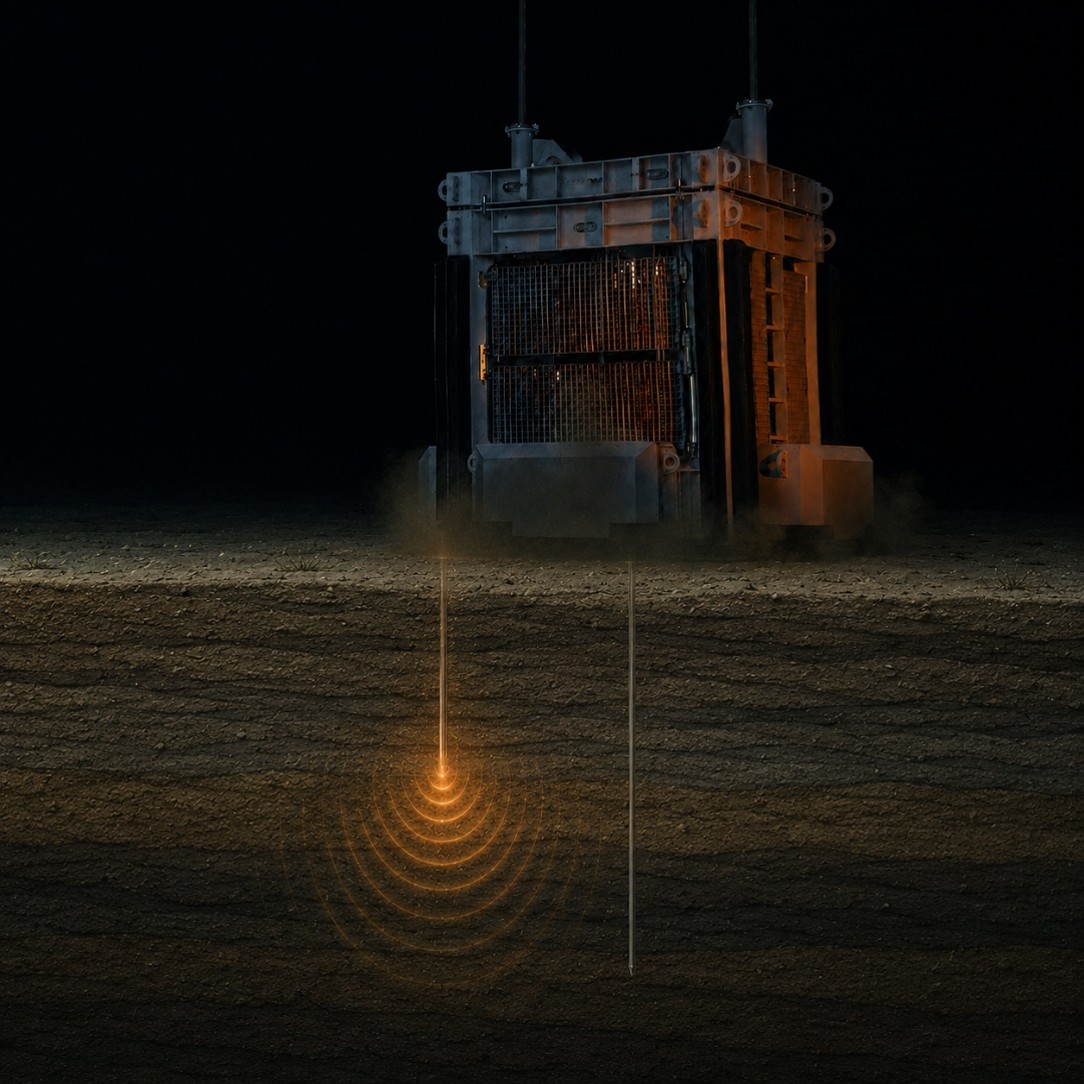
The argument for seabed CPT may then sound overwhelming. But that clear advantage of DTH, a soil at essentially any depth can be tested, remains. Therefore seabed CPT systems must be available that can get the CPT to the deeper target depths that are being specified.
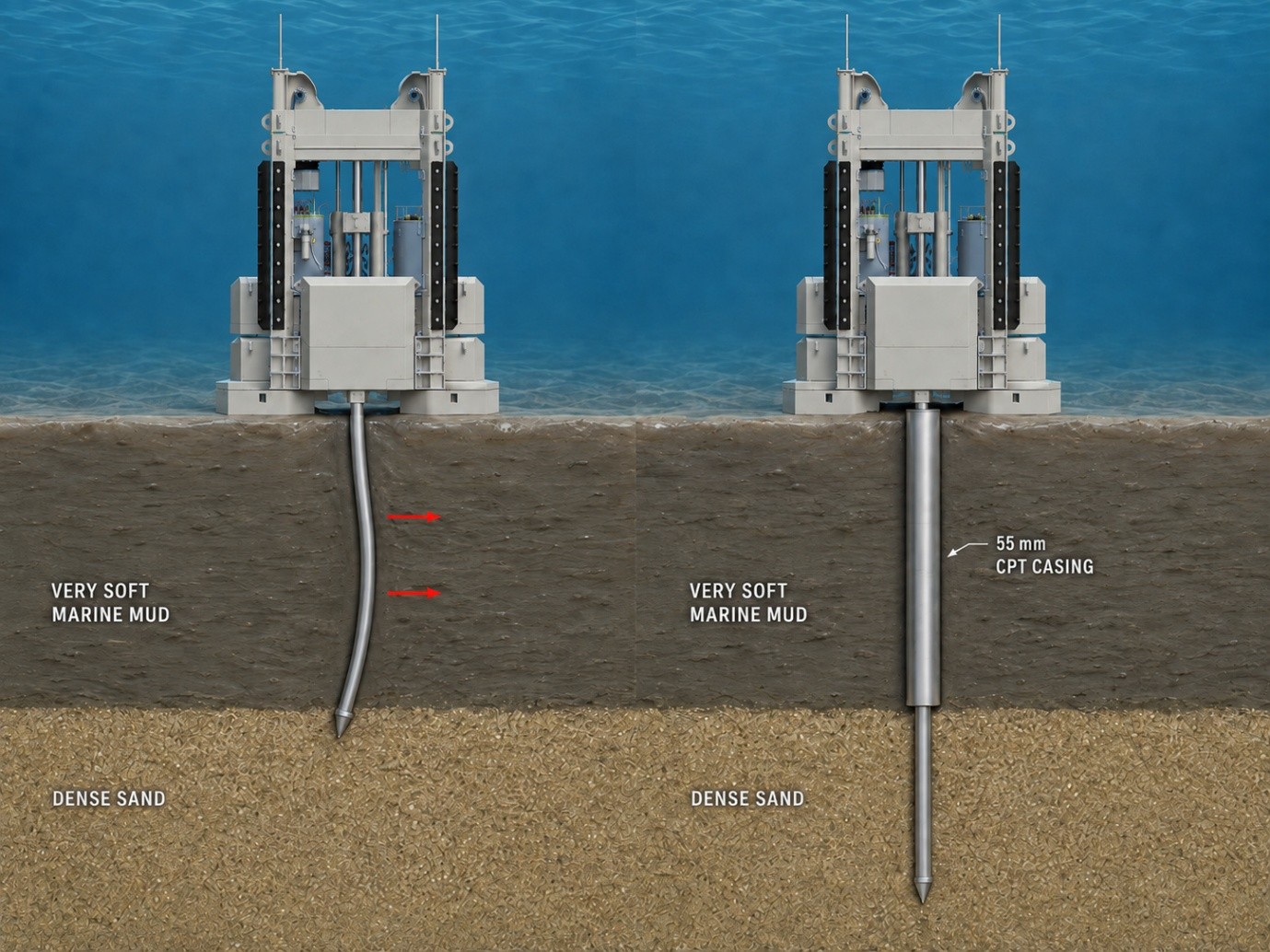
The JIP identified the two main contributors to CPTs not reaching depth as being rod friction and rod buckling. A secondary contributor is lack of pushing force, however if you do not address the other issues, particularly rod buckling, then simply adding pushing force is not enough.
When conducting a marine CPT, particularly in deep water, the seabed system will often be deployed onto very soft marine sediments. These near-surface deposits can be so soft that defining a distinct seabed interface, the point at which the water column ends and the soil begins, can itself be challenging. Although steadily increasing in strength with depth, due to the overburden pressure, the soft marine deposits may be around 10 – 20m thick. This creates a significant portion of the marine CPT in which the rods have very little lateral support. Pushing into stiff underlying soils becomes a recipe for disaster as the applied pushing force results in bending of the CPT tubes, rather than penetration into the hard soil layers. Increasing pushing force will not solve this issue. The CPT tubes must be supported through the softest material, which is normally conducted by deploying casing. CPT casing is typically 55mm diameter and in some cases even this provides in sufficient lateral support.